
This is for the self-publishers among us. I wanted to think about the phenomena that is self-publishing and, in part, my own responses to being a self-published author.
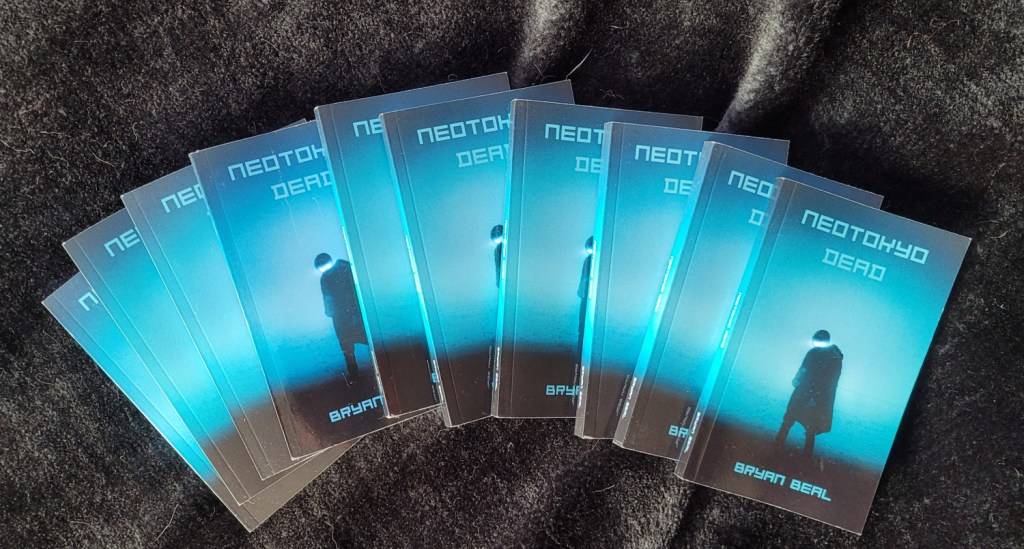
As I have talked to people, I have found myself saying NeoTokyo Dead is “only self-published.” Even as I have said this, I have caught myself up and tried to stop myself. Usually, my mouth is running well and truly ahead of my brain. It is almost as if there is a self-conscious deferment to the perceived superiority of traditional publishing via the route of getting represented by an agent, and then, finally, having a publisher look at and publish your book.
From what little I have read, I am not alone. Scribe Media author Tucker Max says traditional publication “sends [a] signal of validation (to some people).” He also gives a whole list of why authors should self-publish, and they really do match up with my aspirations. There is also a lot of commentary out there on the rise of indie authors, even traditionally published success stories going indie, while traditional publishing starts to struggle to appeal to authors or even, in some cases, keep the authors they have.
The benefits of self-publishing are immense. For starters, there is much more creativity allowed because you do not have a large company standing over your shoulder, telling you such-and-such just would not fly in the current market. That means authors can truly write what is on their hearts to write and do whatever they want. Not many commentators inside the self-publishing industry want to mention it, but there is a blot on that freedom landscape. Their reluctance is understandable, as they have considerable interest in advancing the self-publishing line. What limits the freedom of an indie author are the platforms themselves, such as Smashwords and Amazon. They reserve the right to deny publication to a work that violates certain conditions. Admittedly, you would have to write something fairly horrendous to have your work removed from Smashwords, but there could be more political reasons, rather than strictly moral or ethical, for such removals in the future. Even the moral or ethical reasons can be quite opaque, such as defining what “hate speech” actually means.
At the end of the day, we are published, not matter the path we have taken. Do we need to be multi-million-copy-selling authors before we cease apologising for being indie authors? And what does success look like, anyway? Tucker, quoted above, seems to think if you’re bringing in $US50 K a month, (my jaw dropped at that sort of money), you are in the “successful” bracket. And that is the other good thing we get from being indie authors. We are able to choose what success means to us. Traditional publishers have only one metric by which they measure success: profit. They care little for social impact and so on, unless it feeds into more profit. They will swing with the social and political currents of the time to ensure the metric is maintained in the positive. As indie authors, we are able to choose. In publishing NeoTokyo Dead, I have set my terms of success. I will be very happy if I sell ten copies to people who are not friends or family, or people I do not not work with in my “other” job. If you want to make an old dude happy, you can over on Amazon! Not the subtlest hint, I know.
My point is, like a lot of authors, I am finding there is less to feel inferior about as an indie author. I have more freedom. I can write what I want. I can say what I like. I still own my book. When I get some more budget, I can even send work to cover designers and editors of my choice. All the while, I can bring quality fiction, which I really enjoy reading, to other people who might also share my love for characters like Killian Devon and Juneel Forson.
So can you. I think it is time we started to think in terms of being true authors and considered traditional publishing just one option open to us. It is not the superior choices and it should confer more status. Many creatives lacked status, only to have their genius and talent recognised much later. Hopefully, your talent will be recognised earlier than theirs!


 Bryan Beal
Leave a comment